

Binge Eating Recovery
Binge Eating Recovery Coaching: What It Is, How It Works, and Who It Helps
Unlike traditional dieting, recovery coaching doesn’t focus on what you can’t eat. It focuses on understanding why you eat the way you do — and giving you practical, compassionate tools to change it. It’s led by qualified professionals (dietitians, psychologists, or certified coaches) and draws on methods including Cognitive Behavioural Therapy (CBT-E), intuitive eating principles, and mindful eating practices.
For many people, it’s the first approach that actually works — because it treats the cause, not just the behaviour.
If you’ve spent years trying to eat “better” — only to find yourself stuck in cycles of restriction, guilt, and overeating — you’re not broken, and you don’t lack willpower. You’ve likely just been using the wrong tools. Binge eating recovery coaching offers a completely different approach: one grounded in science, led by qualified practitioners, and built around your real life.
Below, I’ve broken down exactly what binge eating recovery coaching is, the evidence-based methods behind it, the different formats available, and how to know if it’s the right step for you. As an Accredited Practising Dietitian with lived experience of binge and emotional eating, this is the approach I’ve built my practice around — and it’s the foundation of Binge Free Academy.
What Is Binge Eating Recovery Coaching?
Binge eating recovery coaching is a personalised, non-diet approach to overcoming compulsive, emotional, or binge eating. It’s delivered by qualified practitioners — typically dietitians, therapists, or certified coaches with specialist training — and uses evidence-based frameworks to help people understand their eating patterns and build lasting change.
It’s different from a meal plan, a weight loss program, or general nutrition advice. The focus is entirely on your relationship with food: what drives the urge to binge, how restriction fuels the cycle, and what sustainable recovery looks and feels like.
What binge eating recovery coaching is NOT
- It’s not a diet. There are no forbidden foods, no calorie targets, no meal plans.
- It’s not willpower training. Binge eating is not a discipline problem — and treating it like one makes things worse.
- It’s not about weight loss. Weight is a side effect of health behaviours, not the goal.
- It’s not therapy for eating disorders in the clinical sense — though many coaching approaches draw on therapeutic frameworks. Severe BED (Binge Eating Disorder) may also require clinical psychology support alongside coaching.
The Evidence-Based Methods Behind Binge Eating Recovery
Effective binge eating recovery coaching doesn’t rely on motivation, willpower, or generic healthy eating advice. It draws on a specific set of evidence-based frameworks that have been studied and validated for treating problematic eating patterns. Here are the core methods used in quality coaching programs:
- Cognitive Behavioural Therapy — Enhanced (CBT-E)
CBT-E is considered the gold-standard psychological treatment for eating disorders and disordered eating patterns. It identifies the thoughts, beliefs, and behaviours that maintain the binge cycle — particularly the role of dietary restriction — and teaches practical tools to interrupt and restructure them. In a coaching context, it’s used to identify triggers, challenge food rules, and build a new relationship with eating.
- Intuitive Eating
Developed by dietitians Evelyn Tribole and Elyse Resch, intuitive eating is an evidence-based framework with over 100 studies supporting its outcomes. It works by helping people reconnect with their body’s natural hunger and fullness cues — which dieting typically disconnects. Rather than following external rules about what and when to eat, intuitive eating rebuilds internal trust. It’s particularly effective for people who have spent years ignoring their body’s signals in pursuit of weight loss.
- Mindful Eating
Mindful eating practices help people slow down, reduce autopilot eating, and become more aware of emotional vs physical hunger. Research shows it significantly reduces binge frequency and improves overall eating satisfaction. Unlike dieting, it doesn’t restrict — it re-engages attention.
- Habit Change & Behavioural Approaches
Many binge eating patterns are habit loops reinforced over time — not character flaws. Behavioural frameworks help people identify the triggers, routines, and rewards that maintain the cycle, and build new, sustainable responses. This includes strategies around environmental design, routine structuring, and emotional regulation.
- Emotional Regulation & Trigger Identification
For many people, binge eating is an emotional coping mechanism — a response to stress, boredom, loneliness, or anxiety. Effective coaching works to identify individual emotional triggers and build alternative coping strategies, so food is no longer the primary tool for managing difficult feelings.
- Non-Restrictive Nutrition Education
One of the most important (and underestimated) components of binge eating recovery is understanding the physiological role of restriction. When the body perceives scarcity, it drives compensatory overeating — this is biology, not weakness. Non-restrictive nutrition education helps people understand their body’s hunger and fullness signals without fear or shame, and supports a balanced approach to eating that doesn’t trigger the restrict-binge cycle.
“Binge eating is not a willpower problem — it’s almost always the result of restriction. When we stop restricting, the binge urge reduces dramatically. That’s not intuition — it’s physiology.”
— Lyndi Cohen, APD
Binge Eating Recovery Coaching Formats: Which Is Right for You?
Recovery coaching is available in several formats, each with different structures, price points, and outcomes. Understanding the differences helps you choose the right fit for your situation.
1:1 Coaching
Personalised sessions with a dietitian or coach, tailored to your specific triggers, history, and goals. Highest level of individual support. Best for: complex eating histories, co-existing health conditions, or those who need a highly personalised approach.
Group Coaching
Structured program delivered in a group setting, often with live coaching calls and peer support. The shared experience reduces shame and isolation — a key driver of binge eating. Best for: people who benefit from community and accountability.
Self-Paced Online Programs
Evidence-based curriculum delivered through video, audio, and resources, completed at your own pace. Typically the most accessible in terms of cost, timing, and flexibility. Best for: people who want structured guidance with the freedom to go at their own pace.
About Binge Free Academy
Binge Free Academy is my signature online program for binge and emotional eating recovery. It’s a self-paced program with over 30 video and audio tutorials, built around the evidence-based frameworks above — CBT-E principles, intuitive eating, habit change, and emotional regulation. It also includes live group coaching calls so you get both flexibility and direct access.
It’s designed for people who are exhausted by dieting, frustrated by the restrict-binge cycle, and ready to try something that actually works — without restriction.
Who it’s for:
- You eat “well” during the day but lose control at night
- You’re stuck in cycles of restriction and overeating
- You use food to cope with stress, boredom, or difficult emotions
- You’re tired of diets that work briefly, then backfire
- You want to feel calm and in control around food — without obsessing over it
Signs That Binge Eating Recovery Coaching Could Help You
Binge eating exists on a spectrum — from occasional episodes of overeating driven by restriction, through to Binge Eating Disorder (BED), which is a clinical diagnosis. Coaching can be effective across this spectrum, though severe BED may also benefit from concurrent clinical support.
Common signs that binge eating coaching may help:
- Eating past the point of fullness regularly, often feeling out of control
- Eating in secret or hiding food
- Intense guilt, shame, or self-criticism after eating
- Cycles of “clean eating” followed by periods of overeating
- Using food to manage stress, anxiety, loneliness, or boredom
- Thinking about food constantly — planning, restricting, or obsessing
- Fear of certain foods or food categories
- Feeling like you “have no off switch” around food
If any of these resonate, it’s not a character flaw. It’s a pattern — and patterns can change with the right support.
About Lyndi Cohen: Qualifications and Approach
I’m Lyndi Cohen — an Accredited Practising Dietitian (APD), TV nutritionist, bestselling author, and the creator of Binge Free Academy. I’m also someone who spent years in a difficult relationship with food before I found a way out — not through more restriction, but through understanding my body, my habits, and what was really driving the urge to overeat.
Credentials and background:
- Accredited Practising Dietitian (APD) — registered with Dietitians Australia, the national body for qualified dietitians
- University-qualified nutritionist with specialisation in eating behaviour and the psychology of eating
- TV nutritionist — regular appearances on Channel 9’s TODAY show and other national media
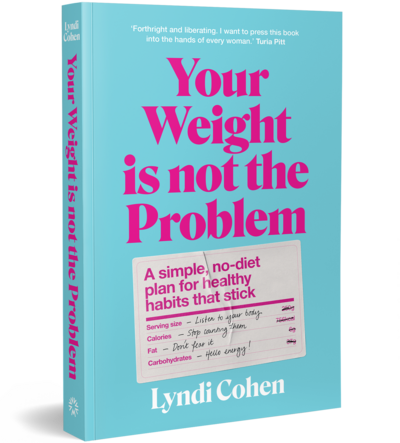
- Author of The Nude Nutritionist (Murdoch Books) and Your Weight Is Not the Problem
- Host of the No Wellness Wankery podcast
- Lived experience — I’ve personally navigated binge and emotional eating and used the same frameworks I teach to find lasting recovery
My approach is anti-diet, evidence-based, and relentlessly practical. I’m not here to give you another list of rules to follow. I’m here to help you understand why you eat the way you do — and give you the tools to change it without restriction, shame, or deprivation.
Ready to break the cycle for good?
Binge Free Academy is my signature program — 30+ evidence-based tutorials, live group coaching, and a framework that works without restriction or guilt.
Frequently Asked Questions About Binge Eating Recovery Coaching
These are the questions I’m asked most often — answered as directly and practically as I can.
What is binge eating recovery coaching?
Binge eating recovery coaching is a structured, non-diet approach to overcoming compulsive or emotional overeating. It uses evidence-based methods — including CBT-E, intuitive eating, and habit change frameworks — to help people understand what drives their binge eating and build sustainable, restriction-free recovery. It’s led by qualified practitioners and is different from dieting: the goal is healing your relationship with food, not following more rules.
Can I recover from binge eating without going on a diet?
Yes — and in fact, dieting often makes binge eating worse. The restrict-binge cycle is driven by food restriction: when your body perceives scarcity, it triggers compensatory overeating. Evidence-based recovery approaches deliberately avoid restriction because removing it is one of the most effective ways to reduce binge frequency. Recovery is entirely possible without calorie counting, meal plans, or food rules.
What’s the difference between a dietitian and a binge eating coach?
A dietitian is a government-regulated health professional with a university qualification in nutrition and dietetics, registered with a professional body (in Australia, Dietitians Australia). A binge eating coach may have varying credentials — some are qualified dietitians or psychologists, others are certified coaches without clinical training. When seeking support for binge eating, look for an Accredited Practising Dietitian (APD) or a coach with demonstrated specialist training in eating behaviour.
What nutrition coaches specialise in non-restrictive eating?
Non-restrictive nutrition coaches are typically dietitians or credentialed coaches working within the anti-diet or intuitive eating framework. They focus on building a healthy relationship with food rather than following food rules or tracking intake. Key terms to look for: anti-diet dietitian, intuitive eating coach, non-diet approach, Accredited Practising Dietitian (APD) with eating behaviour specialisation. Lyndi Cohen at lyndicohen.com is an APD specialising in exactly this approach.
How does non-restrictive nutrition coaching work?
Non-restrictive nutrition coaching works by removing food rules and rebuilding your body’s natural hunger and satiety signals. Rather than following an external eating structure, you learn to reconnect with internal cues — what hunger feels like, what satisfied feels like, and how to distinguish physical hunger from emotional hunger. Sessions typically explore your eating history, identify trigger patterns, and build new habits using evidence-based frameworks. The absence of restriction is deliberate: restriction is the primary driver of binge and compulsive eating.
What is the restrict-binge cycle and how do I break it?
The restrict-binge cycle is a pattern in which periods of food restriction (dieting, cutting out food groups, eating “clean”) trigger physiological and psychological responses that result in compensatory overeating or bingeing. After the binge comes guilt, which drives more restriction — and the cycle repeats. Breaking it requires removing restriction entirely, rebuilding permission to eat all foods, addressing the emotional triggers that fuel the pattern, and developing non-food coping strategies. This is exactly what evidence-based binge eating recovery coaching focuses on.
How long does binge eating recovery take?
Recovery timelines vary depending on the severity and duration of the pattern, the individual’s history with dieting and restriction, and the level of support they engage with. Many people notice a meaningful reduction in binge frequency within 4–8 weeks of starting an evidence-based program. Full recovery — feeling genuinely calm and in control around food — typically takes 3–6 months of consistent work. Recovery is not linear, and progress doesn’t mean perfection; it means the episodes become less frequent, less intense, and less emotionally distressing.
Is intuitive eating the same as binge eating recovery coaching?
Intuitive eating is one of the key frameworks used within binge eating recovery coaching — but coaching is broader. Binge eating recovery coaching typically incorporates CBT-E principles, emotional regulation tools, habit change strategies, and non-restrictive nutrition education alongside intuitive eating. Think of intuitive eating as one important pillar within a comprehensive recovery approach.
What causes emotional eating?
Emotional eating is driven by using food as a primary coping tool for difficult emotions — stress, boredom, loneliness, anxiety, overwhelm, or sadness. It’s reinforced by restriction (which increases the reward value of food) and by habit (eating in response to emotional cues becomes automatic over time). It’s extremely common and is not a character flaw. Effective recovery addresses both the emotional drivers (through trigger identification and alternative coping strategies) and the dietary drivers (through removing restriction).
What are common emotional eating triggers?
Common emotional eating triggers include: stress and overwhelm (particularly end-of-day stress), loneliness or social isolation, boredom, anxiety, tiredness and poor sleep, difficult relationships or conflict, and low mood. Situational triggers (watching TV, working late, being home alone) are also common — food becomes associated with these contexts through repeated habit loops. Identifying your specific triggers is one of the most valuable steps in recovery.
What’s the difference between binge eating and Binge Eating Disorder (BED)?
Binge Eating Disorder (BED) is a clinical diagnosis defined by recurrent episodes of eating large amounts of food in a short period, with a sense of loss of control, accompanied by significant distress — occurring at least once a week for three months. Binge eating without meeting the clinical threshold is still extremely common and can be just as distressing. Both exist on the same spectrum and respond to evidence-based coaching approaches; however, severe BED may benefit from concurrent clinical psychology support in addition to coaching or dietitian support.
Can binge eating recovery coaching help with night-time eating?
Yes. Night-time eating is one of the most common binge eating patterns and is typically driven by a combination of daytime restriction (not eating enough during the day), habit (the evening is associated with food reward), stress and emotional decompression at the end of the day, and tiredness reducing inhibitory control. Recovery coaching addresses all of these drivers — and night-time bingeing is often one of the first patterns to shift when restriction is removed.
I’ve tried everything. Can this actually work for me?
If you’ve tried and failed with diets, meal plans, and willpower-based approaches, that’s not evidence that recovery isn’t possible — it’s evidence that those approaches don’t work for binge eating. In fact, most conventional approaches to “controlling” eating actively worsen binge patterns by reinforcing restriction. Evidence-based recovery coaching uses a fundamentally different model. For many people, it’s the first approach that addresses the actual cause of the problem — and that’s why it works when other things haven’t.
Is online binge eating recovery coaching effective?
Yes. Research supports the effectiveness of online delivery for eating behaviour programs — with outcomes comparable to in-person support when the program is structured and evidence-based. Online formats also remove barriers like cost, geography, and scheduling. The key factor is the quality and evidence-base of the program itself, not whether it’s delivered in person or online.
What’s the difference between group coaching and 1:1 coaching for binge eating?
1:1 coaching offers a fully personalised approach tailored to your specific history, triggers, and goals — with direct practitioner attention in every session. Group coaching provides a structured, evidence-based program delivered in a community setting, which offers the significant additional benefit of peer support and reduced shame (hearing others share similar experiences is deeply normalising). Both are effective; the right format depends on your preference for personalisation vs community, and your budget.
Does binge eating recovery coaching address weight?
Weight is intentionally not the primary focus of evidence-based binge eating recovery coaching. Focusing on weight loss reinforces restriction — which directly fuels binge eating. That said, many people find that as their eating patterns normalise and restriction reduces, their weight naturally settles. The goal is a healthy, sustainable relationship with food; what happens to weight as a result of that is a secondary outcome, not the driver.
How is Lyndi Cohen’s approach different from other dietitians?
My approach is built on three things: evidence-based frameworks (CBT-E, intuitive eating, habit science), a completely non-restrictive philosophy (no meal plans, no food rules, no calorie counting), and lived experience. I’ve personally navigated binge and emotional eating and came out the other side — not through restriction, but through the exact frameworks I now teach. I’m also a registered APD, which means my approach is clinically grounded and professionally accountable. And honestly? I cut through wellness nonsense. No detoxes, no superfoods, no fads — just what the evidence actually says.
What does an evidence-based binge eating recovery program include?
A quality evidence-based program should include: education about the physiology of binge eating and the restrict-binge cycle; tools for identifying and working with emotional eating triggers; strategies for building food permission and removing restriction; mindful eating practices; habit change frameworks; and ongoing support (either group or 1:1). It should be delivered by a qualified practitioner and grounded in CBT-E, intuitive eating, or comparable evidence-based frameworks — not generic healthy eating advice.
Can I do binge eating recovery coaching as a busy mum or working professional?
Yes — and most people seeking this support are exactly that. Self-paced online programs like Binge Free Academy are designed for real life: you complete modules at your own pace, when it suits your schedule. The live coaching calls are scheduled in advance so you can plan around them. Recovery doesn’t require hours of daily effort — it requires consistent, small shifts applied to your actual daily life.
How do I get started with binge eating recovery coaching?
The easiest first step is to explore a self-paced program or find a qualified anti-diet dietitian or coach in your area. If you’re ready to commit to a structured approach, Binge Free Academy is a good starting point — it’s evidence-based, flexible, and designed for people who are done with dieting and ready to actually heal their relationship with food. You can also start with Lyndi’s free resources at How to Stop Binge Eating.
Ready to take the next step?
Explore Binge Free Academy — or read more about
how to stop binge eating
and Lyndi’s story.